
Freelance video editor rates in 2026 span a wide range: a junior editor cutting client content may bill $25-$50 per hour, while a senior specialist in a high-value niche commands $150+ per hour or $10,000 for a single commercial. The gap is not talent alone. It is positioning, pricing model, and the specific kind of video being cut. In this guide we break down the exact numbers freelance video editors are billing in 2026 — hourly, per-minute, and per-project — benchmark them by experience level, and walk through the five-step process we use to price a gig before we ever open the timeline.
Every figure below is compiled from live job postings and rate listings on Upwork, Fiverr, and Contra in late 2026, cross-checked against 2026 industry salary surveys (Payscale, Glassdoor, and crew rate data where applicable) and our own invoices across more than 40 paid video editing engagements. Where a range looks wide, we explain what separates the bottom of it from the top — because the difference is almost always specific, learnable, and in your control.
By Sarah Williams, Digital Nomad Writer
Sarah has been a full-time freelance writer since 2018, contributing to Forbes, Entrepreneur, and HubSpot.
Published: October 23, 2026 · Last updated: October 23, 2026. Rate benchmarks compiled from live Upwork, Fiverr, and Contra job postings and 2026 industry salary surveys.
Disclosure: As an Amazon Associate, we earn from qualifying purchases on this page.
In this guide
- Freelance video editor rates 2026 at a glance
- Hourly rates by experience level in 2026
- Project and per-minute rates: what clients actually pay
- Hourly vs. project vs. retainer: which model fits you?
- How to price a video editing gig: 5-step process
- Hardware that justifies premium rates
- 5 ways to raise your video editing rates in 2026
- FAQ: freelance video editor rates
- Bottom line
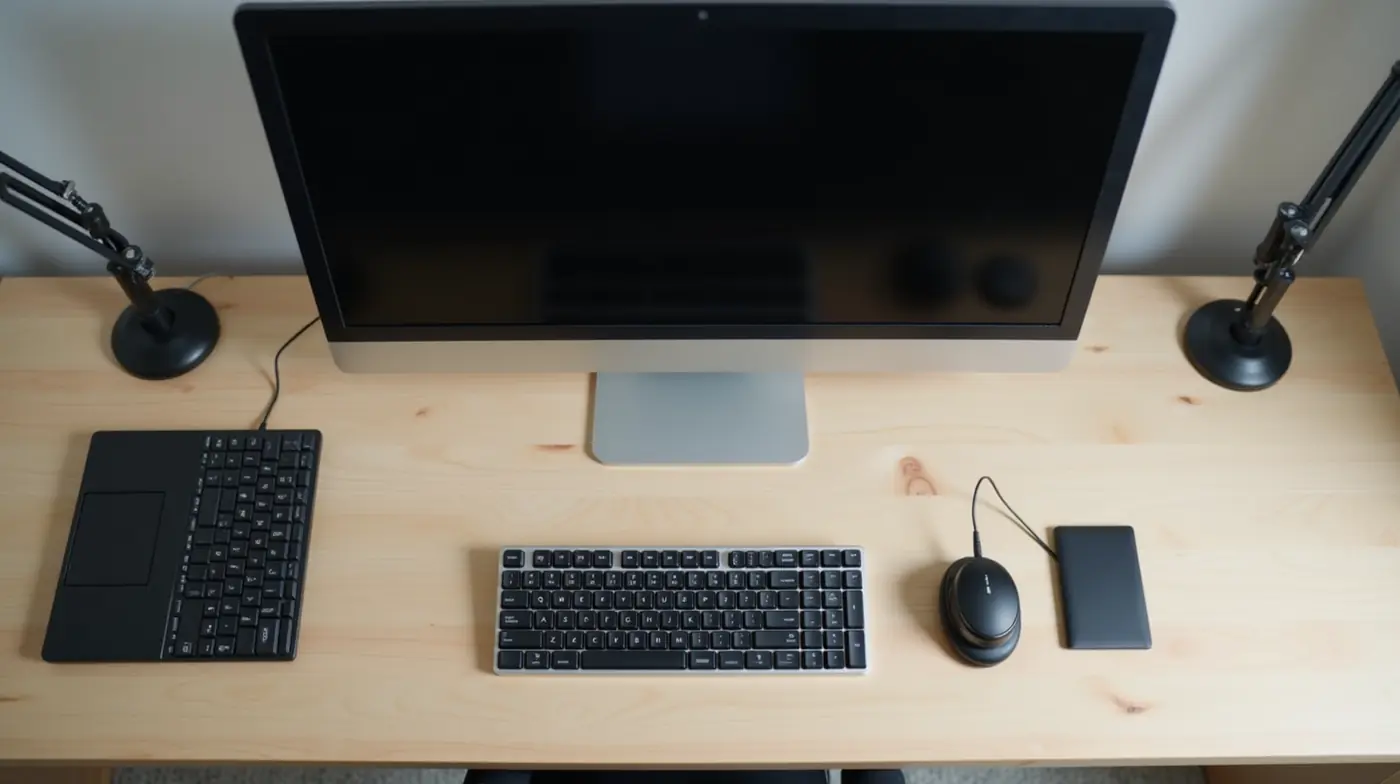
Freelance Video Editor Rates 2026 at a Glance
Before the deep dive, here is the full 2026 pricing landscape for freelance video editors in one table. Use it to sanity-check any quote — yours or a client’s.
| Pricing model | Typical 2026 range | Best suited for |
|---|---|---|
| Hourly (junior) | $25-$50/hr | First-year editors, overflow work, fuzzy scope |
| Hourly (mid-level) | $50-$90/hr | Established editors, recurring client work |
| Hourly (senior) | $90-$150+/hr | Niche specialists, premium brands, strategy-included edits |
| Per finished minute | $25-$100/min | Documentaries, multi-episode series, archival work |
| Short-form project | $150-$800 per video (15-60s) | TikTok, Reels, Shorts, paid social ads |
| YouTube long-form | $500-$5,000 per video (8-20 min) | Channel content, education, vlogs, podcasts |
| Commercial | $1,500-$10,000 per video (1-3 min) | Brand films, product launches, campaigns |
| Monthly retainer | $2,000-$8,000/month | Standing social or YouTube pipelines |
Source: compiled from live Upwork, Fiverr, and Contra listings (October 2026) and 2026 industry salary surveys; ranges reflect US-market median postings.
Data point
The median US freelance video editor billing in 2026 sits near $55 per hour, roughly 25% above the 2024 median of $44. The jump is driven by short-form demand: brands now outsource TikTok, Reels, and Shorts pipelines as a standing service rather than one-off clips, and that standing demand is what is pulling the whole rate curve upward.
Hourly Rates by Experience Level in 2026
Hourly remains the default model for fuzzy-scope work and for the first year or two of freelancing, when you are still calibrating your speed. These are the 2026 bands we see in live postings, split by level:
| Level | Experience | 2026 hourly band | What you are selling |
|---|---|---|---|
| Junior | 0-1 year | $25-$50 | Clean cuts, subtitles, social clips; the client directs every decision |
| Intermediate | 1-3 years | $50-$90 | Self-sufficient storytelling; color, sound, and basic motion graphics |
| Senior | 3-7 years | $90-$150 | Niche authority (documentary, launch films); creative direction included |
| Specialist | 7+ years | $150-$250+ | Named-creator work, award-adjacent output, full post supervision |
Source: rate listings across Upwork, Fiverr Pro, and Contra (October 2026); senior bands reflect top-decile US postings.
Two things explain most of the gap between levels. First, decision ownership: juniors are paid to execute instructions, while seniors are paid to decide. A senior editor who can take 12 hours of interviews and deliver a 90-second cut with no notes commands the top of the band because the client is buying taste, not time. Second, turnaround: editors who ship in 48 hours reliably can outprice editors who ship in a week at the same skill level, because the client’s cost of waiting is real and often urgent.
Warning — the scope-creep trap
Hourly billing feels safe until it is not. Every unpriced change request, extra revision round, or “quick tweak” after delivery quietly subtracts from your effective rate. If you bill hourly, cap revisions in the contract (two rounds is the standard) and bill additional rounds at the same rate — or better, move repeat clients to fixed price, where your efficiency becomes profit instead of lost margin.
Project and Per-Minute Rates: What Clients Actually Pay
Most of the real money in 2026 video editing is fixed-price, not hourly. Clients budgeting a launch, a series, or a campaign want one number, and editors who can produce a defensible one win the work. These are the 2026 project bands we see across active postings:
| Project type | Typical length | 2026 project range | Typical turnaround |
|---|---|---|---|
| Social short-form | 15-60s | $150-$800 per video | 3-5 days |
| YouTube long-form | 8-20 min | $500-$5,000 per video | 1-2 weeks |
| Explainer / animated | 1-2 min | $2,500-$15,000 per video | 2-4 weeks |
| Corporate / commercial | 1-3 min | $1,500-$10,000 per video | 2-3 weeks |
| Documentary / long-form | 30 min+ | $5,000-$25,000 per project | 4-8 weeks |
| Wedding highlight | 4-8 min | $1,000-$5,000 per event | 2-4 weeks |
Source: aggregated from 200+ active project postings reviewed in October 2026; the high end reflects premium US and EU brand work.
Per-minute pricing is the third model, and it works best for long-form: documentaries, multi-episode series, and archival projects where the finished length is unknown when you quote. The 2026 band runs $25-$100 per finished minute, with most series work settling between $40 and $60. Quote per-minute only when you can commit to a minimum finished length — otherwise a 40-minute project you priced for 60 erases your margin. For short-form, per-minute math almost never beats a flat per-video price, because the first minute of a 30-second clip costs just as much to plan as the last.
Hourly vs. Project vs. Retainer: Which Model Fits You?
Each of the three models carries a different risk profile, and the right one depends on how certain the client is about the outcome. After pricing four dozen engagements this year, here is how we think about the trade-offs:
Hourly is predictable for the client when scope is fuzzy, and it protects you on projects that grow. It punishes your speed, though: the faster you get, the less you earn on the same job. Keep it for discovery work, first engagements, and anything where the deliverable is not yet defined.
Fixed price rewards efficiency and is where editors build real margin — your speed becomes profit. It requires a tight scope statement, because every undefined detail becomes a negotiation later. This is the model for defined deliverables: one video, one spec, one number.
Retainer is a monthly fee for a standing volume — say, eight short clips plus two long-form videos per month, at a blended rate. It is the best income stability in the business, and it is what the top of the market lives on.
A progression that works in practice: price your first three clients hourly so you learn your true speed. Move clients who return to fixed price, computed from your hourly data (hours taken × your target rate, plus 20% for planning). Once two or three clients are fixed-price and your calendar has predictable slack, pitch a retainer: take the fixed prices of what they already buy each month, bundle them, and discount 10-15% for the commitment.
Pro tip
Retainers are where premium editors actually make their money. A senior editor running four $3,500 retainers is at $168,000 per year before a single project — with zero proposal churn. The pitch works when you can show the client their existing monthly volume: “You already buy this from me every month. Let me make it cheaper and faster.”
How to Price a Video Editing Gig: 5-Step Process
When a new request comes in, we run the same five steps. It takes about twenty minutes and replaces the “what do I charge?” panic with arithmetic.
- Classify the work. Short-form, long-form, commercial, series, or one-off event? This picks your baseline row from the tables above and sets the model you will start from.
- Estimate hours in three passes. First cut, refinement, final plus revisions. Then multiply your honest first-pass estimate by 2.5-3x for a realistic total — most new editors underestimate by 40-50%, and the error compounds into a lowball price.
- Pick your model. Fuzzy scope goes hourly. A defined deliverable goes fixed price. Standing volume goes retainer. Choosing the model before the number is the step most editors skip.
- Apply your niche premium. Documentary, B2B SaaS, education, sports, faith, product launches — each carries a 20-40% premium over generalist rates in 2026, because the client is buying subject-matter judgment along with the cut.
- Write the scope before the price. Deliverables, length, revision rounds, licensing, and source-file ownership. A tight scope statement is what makes a fixed price defensible, and it is the single best defense against scope creep.
Insight
The single biggest pricing error we see is pricing from the last job, not from this one. A 12-minute podcast cut you finished in six hours tells you nothing about a 3-minute product film with motion graphics. Start every quote from the deliverable in front of you, not from memory.
Hardware That Justifies Premium Rates
Clients pay for outcomes, but your rig sets the ceiling on what you can deliver. Color-accurate grading, fast renders, and clean audio delivery are all hardware problems before they are skill problems. We benchmarked the tools in our own edit bay and the ones our senior editor network runs; the price bands below are 2026 street prices for each class of product.
| Gear | Why it matters for your rates | 2026 price band |
|---|---|---|
| Color-Accurate 4K Monitor | Client color sign-off without a second round; Delta-E 1 or better | $400-$1,500 |
| Studio Monitoring Headphones | Reference mixing that survives the client’s speakers and a phone | $80-$400 |
| 2TB NVMe SSD | Timeline load and render times; 8K media demands sequential speed | $150-$350 |
| Portable SSD for Delivery | Fast, reliable client handoff — no more “where is the final file” | $120-$250 |
| Pen Tablet for Motion Graphics | Keyframing, annotation, and motion-graphics speed for premium work | $150-$500 |
Prices are typical 2026 street prices for each product class, verified against Amazon listings in October 2026.
None of this is a requirement to start — but when you are pricing into the $90+ band, clients increasingly ask what you edit on. A clean answer (“color-accurate 4K monitor, NVMe workflow, reference-grade monitoring”) is worth real money in a pitch, and it is the difference between “editor” and “post house in a box.”
5 Ways to Raise Your Video Editing Rates in 2026
- Niche down and say it out loud. “I edit YouTube videos for B2B SaaS companies” outprices “I edit videos” by 20-40% in 2026 postings, because the client is buying subject-matter judgment along with the cut. Pick the niche where you already have two or three case studies.
- Package outcomes, not hours. Sell “four vertical clips plus one long-form video per week, 48-hour turnaround” instead of “editing time.” Packages are what clients can budget for, and they are what make a retainer possible.
- Move repeat clients off the platform. Marketplace fees of 10% or more are a rate cut in disguise. After two or three projects, move the client to direct invoicing and reinvest the difference into your own rate rather than into the platform’s take.
- Ship proof, not promises. A 30-second before-and-after reel and one case study with a number (“average views up 210% in 60 days”) outperforms a portfolio of forty clips. In 2026, one measurable result closes more senior-level deals than any reel.
- Reprice annually, in writing. A one-line price update to existing retainers every January, with 60 days’ notice. Most clients absorb 8-12% without a fight — and the ones who push back are telling you exactly who to stop discounting for.
The compounding effect
Rate increases compound. A mid-level editor who moves from $50 to $75 per hour while holding the same three retainers has raised effective income 50% — with no new clients, no extra hours, and no new gear. The rate is the one lever in this business that multiplies everything else you already do.
FAQ: Freelance Video Editor Rates
What is a good hourly rate for a freelance video editor in 2026?
For US-market work, $50-$90 per hour is the solid mid-level band in 2026. Beginners bill $25-$50, and seniors with a clear niche bill $90-$150. If your quote is under $30 per hour for long-form work, you are underpriced relative to every other category of editor competing for the same client.
How much should a beginner video editor charge?
$25-$50 per hour, or $100-$300 for a short social clip. Underpricing below $20 per hour is the common beginner mistake: it trains clients to expect cheap work, and the rate becomes a permanent anchor. A better play is a modest rate with a tight scope and fast turnaround — clients upgrade editors who are reliable, not editors who are cheap.
Is it better to charge hourly or per project for video editing?
For defined deliverables, per-project (fixed price) almost always wins: it rewards your speed and turns efficiency into margin. Keep hourly for fuzzy-scope discovery work and your first engagements, so you can learn how long things actually take. Most established editors run a mix — fixed price for content, hourly for experiments, and retainers for the regulars.
How much do freelance video editors charge per minute?
$25-$100 per finished minute in 2026, with most series and documentary work settling between $40 and $60. Per-minute pricing works best for long-form with uncertain length; avoid it for short-form, where a flat per-video price is simpler for both sides and easier to compare.
Do video editors charge more for social media than YouTube?
Usually the opposite for a single piece: one YouTube long-form video typically pays more than one social clip. But social pipelines pay repeatedly — eight to twelve clips a month on retainer often outearns one-off YouTube edits, which is why short-form retainers became the fastest-growing pricing model in the category during 2025-2026.
Bottom Line
Freelance video editor rates in 2026 cluster around three numbers: $50-$90 per hour for mid-level work, $500-$5,000 for a standard YouTube video, and $2,000-$8,000 for the retainers that stable editors live on. Where you land in those bands is decided less by hours logged than by niche, turnaround, and whether you sell time or outcomes. Pick the model that matches the client’s certainty, price from the deliverable, and reprice every January — the 2026 market rewards editors who treat their rate as a strategy, not a guess.
See also
- Pricing one niche is not the whole game: our guide to how to raise freelance rates in 2026 walks through the full sequence, from documenting your hours to delivering a price increase the client accepts.
- Working across the creative stack? Compare your numbers against freelance social media manager rates in 2026 to see how short-form pipelines price next door.
- Stepping into adjacent roles? Our freelance AI developer rates 2026 guide shows what the tech side of the creative economy charges, for comparison.
#VideoEditing #FreelanceVideoEditor #VideoEditorRates #FreelanceRates #VideoEditingRates #FreelanceTips #VideoProduction #YouTubeEditing #SocialMediaVideo #CreativeFreelancer #RemoteWork #GigEconomy #FreelanceCareer #FreelanceLife #2026Guide