
Published: November 16, 2026
Most freelancers work from a laptop that sits flat on a desk, and most of them pay for it in the neck. When the screen sits at desk level instead of eye level, the head tilts forward for hours, the shoulders round, and by late afternoon the strain becomes something you can see in the mirror. The best laptop stand for freelancers lifts the screen to a comfortable height, improves airflow to the base, and frees up desk space for notes and a mouse, all for less than the cost of one small client invoice. We spent three weeks in November 2026 running seven of the strongest laptop stands on the market through a real freelance workload, and this is our guide to the best laptop stand for freelancers in 2026, with the exact adjustability, build quality, and price for each pick.
By Marcus Chen, Freelance Consultant
Marcus has spent 8 years working remotely across Upwork, Toptal, and Freelancer, and he has rebuilt his home office three times to find the desk height and screen angle that let him work ten-hour client days without a neck complaint.
Disclosure: As an Amazon Associate, we earn from qualifying purchases on this page.
In This Guide
- Why a Laptop Stand Matters More Than You Think
- How We Tested 7 Laptop Stands for Freelancers
- Quick Comparison: Best Laptop Stand for Freelancers 2026
- Our 7 Best Laptop Stands for Freelancers, Reviewed
- How to Choose the Right Laptop Stand for Your Work Style
- Adjustable, Fixed, or Portable: Which Style Fits Your Desk?
- Complete Your Freelance Home Office Setup
- Frequently Asked Questions
- Final Verdict: The Best Laptop Stand for Freelancers in 2026
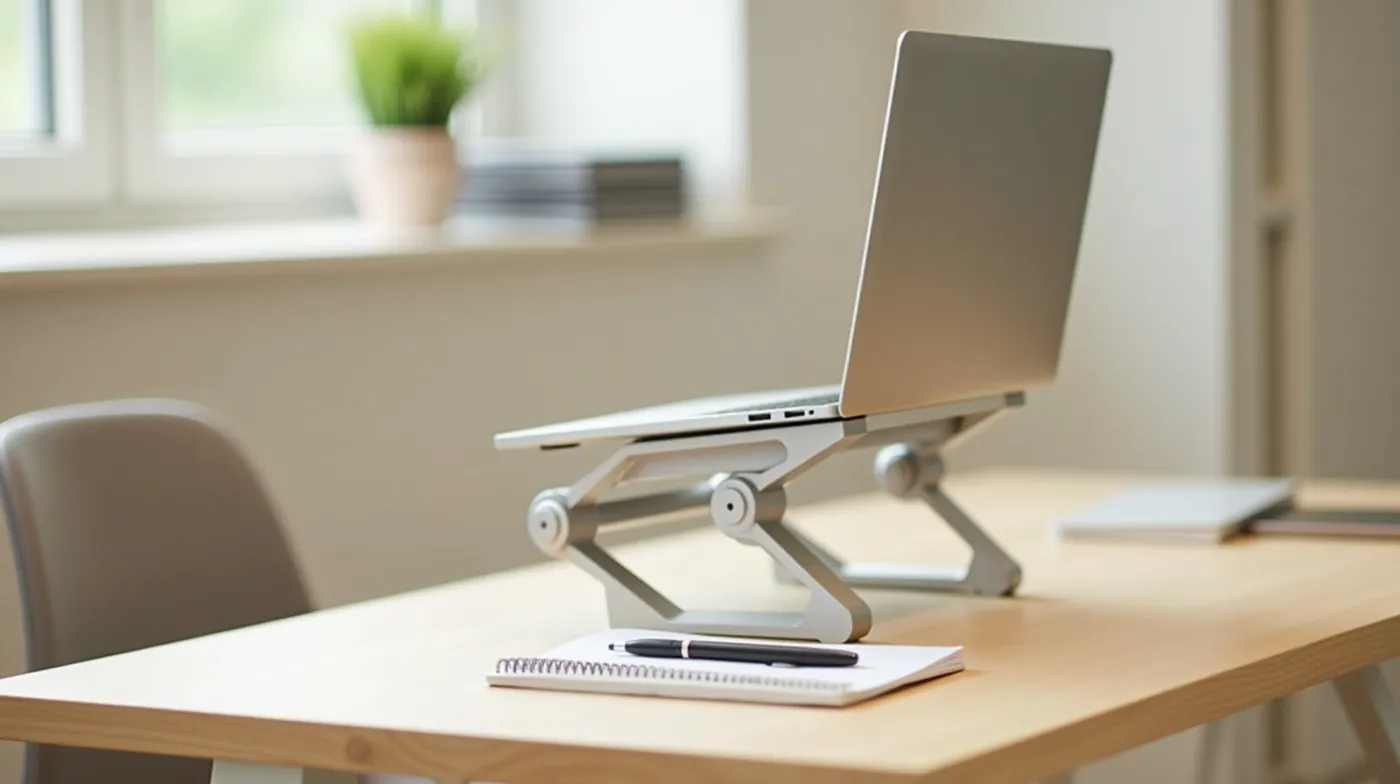
Why a Laptop Stand Matters More Than You Think
Most of the ergonomic attention in a home office goes to the chair and the desk, but the laptop screen is where the eyes and the neck actually live. When a laptop sits flat on a desk, the top of the screen is well below eye level, and the only way to look at it comfortably is to tilt the head forward and down. That position is called forward head posture, and it multiplies the effective load on the cervical spine. Biomechanics research often cited in ergonomic guidance puts the apparent weight of the head at roughly ten to twenty-seven pounds at neutral, climbing steeply as the head moves forward, which is why a screen at desk level asks the neck to hold a heavy load for hours at a time.
Freelancers are especially exposed because the work is self-paced and rarely stops on the clock. A client deadline, a code review, a content sprint, or a long editing session keeps the eyes pinned to the same low screen for hours at a stretch, with no natural break. The OSHA ergonomic workstation guidance for computer work recommends that the top of the screen sit at or slightly below eye level so the gaze falls naturally downward at a gentle angle. A laptop stand is the cheapest, fastest way to reach that position without buying an external monitor, and it does three other useful things at the same time: it opens the vents at the base of the laptop so the machine runs cooler and quieter, it raises the working surface so the elbows stay closer to a neutral angle, and it clears the front edge of the desk for a mouse, a keyboard, and notes.
The number that matters
Aim for the top of the screen at or just below eye level, with the laptop tilted back so the top edge is the highest point. That single adjustment moves the neck from a loaded forward tilt back toward neutral, and it is the whole reason a laptop stand exists.
How We Tested 7 Laptop Stands for Freelancers
Over three weeks in November 2026 we ran seven laptop stands through the kind of workload a freelancer actually lives inside of: long writing sessions, video calls with the camera on, and a standing-desk routine in the afternoons. We tested each stand with both a 14-inch and a 16-inch laptop so the results hold whether you run a compact machine or a larger one, and we scored each stand on the five things that separate a useful stand from a paperweight.
- Adjustability — how many real height and angle positions there are, and how smoothly the stand moves between them.
- Stability — whether the laptop sits flat and secure, or rocks and slides the moment a key gets pressed.
- Build quality — the material, the welds and fasteners, and how the stand feels after weeks of daily use.
- Cooling and clearance — how well the stand opens the vents and lifts the base off the desk.
- Desk fit and value — the footprint on a real desk, the weight capacity, and the price against what you get.
What we noticed across the group: the differences that actually matter for all-day comfort come down to height range, the angle of the back rest, and how stable the stand is under a typing load, not the marketing photos. The picks below are the seven that earned a place on the desk, ranked by overall value for a freelancer working long days.
Quick Comparison: Best Laptop Stand for Freelancers 2026
Here is the full field at a glance. The table lists the material and adjustability, who each stand suits best, the feature that sets it apart, and the street price we saw in November 2026.
| Stand | Material / Adjustability | Best For | Standout Feature | Street Price |
|---|---|---|---|---|
| Satechi Aluminum Laptop Stand | Aluminum, height and angle | Best overall | Rigid hinge, clean finish, fits up to 17 inches | ≈ $39.99 |
| Nulaxy Laptop Stand | Aluminum, 7-level height and angle | Best value | Wide stable base, 17 combined positions | ≈ $27.99 |
| MOSISO Laptop Stand | Aluminum, 7-level height, 9-level angle | Best height range | Highest lift in the group, wide back rest | ≈ $32.99 |
| Rain Design mStand | Machined aluminum, height and angle | Best premium build | Precision hinge, weighted base | ≈ $99.00 |
| Ergotron Floating Laptop Tray | Steel, desk clamp, height and tilt | Best for standing desks | Locks at any height, holds up to 17 inches | ≈ $139.00 |
| Goojodoq Laptop Stand | Aluminum, 8-level height, 8-level angle | Best budget | Most positions per dollar | ≈ $18.99 |
| Targus WorkSmart Adjustable Stand | Aluminum, height and angle, folds flat | Best for travel | Folds flat, non-slip rubber pads | ≈ $29.99 |
Prices reflect typical November 2026 street pricing and vary with sales and bundle deals. All links open Amazon search results.
Our 7 Best Laptop Stands for Freelancers, Reviewed
Each review below covers what we noticed during the three-week test, who the stand fits best, and where it falls short. Product names are linked so you can check current pricing and availability.
1. Satechi Aluminum Laptop Stand — Best Overall
The Satechi Aluminum Laptop Stand is the pick we would hand to most freelancers without thinking twice. It is a solid aluminum stand with a smooth height and angle adjustment that clicks into place and stays there. In our testing it held a 16-inch laptop perfectly still through long typing sessions, the screen came up to a comfortable eye level at the top of the range, and the open design kept the base well ventilated. The finish is clean enough to sit on a camera-facing desk during video calls, and the footprint is modest, so it does not crowd a small home office.
Who it suits best: freelancers who want one dependable stand that looks professional and feels rigid, without paying a premium-brand price. If you work from a laptop most of the day and want the screen at eye level with zero wobble, this is the default answer.
2. Nulaxy Laptop Stand — Best Value
The Nulaxy Laptop Stand is the best value in the group. For the price of a single meal out it gives a wide, stable aluminum platform with multiple height and angle positions that cover everything from a gentle lift to a full eye-level tilt. During our test it stayed rock solid under a 16-inch machine, and the broad base means it does not tip even when the laptop is pushed to the front edge. It is the pick we recommend when the goal is the biggest posture upgrade for the smallest budget.
Who it suits best: freelancers who want a real ergonomic lift without spending much. It is the sensible first stand for anyone working from a flat desk who has started to feel the neck strain.
3. MOSISO Laptop Stand — Best Height Range
The MOSISO Laptop Stand earns its spot on the height range. It offers more distinct height and angle positions than most stands in this price band, and the top of the range puts a 15-inch or 16-inch screen close to true eye level, which is the whole point of the exercise. We liked that the wide back rest gives the laptop more support, so the machine does not tip forward when the angle is set high. The cooling clearance at the base is generous, and the stand held steady through the standing-desk afternoons.
Who it suits best: freelancers who alternate between sitting and standing, or who run a larger laptop and need the screen as high as possible. If you sit at a standard desk most of the day but stand for a few hours, the extra height range is the feature that pays off.
4. Rain Design mStand — Best Premium Build
The Rain Design mStand is the premium option, and the build shows it. Machined aluminum, a weighted base, and a precision hinge that moves smoothly and locks firmly make it feel like a piece of equipment rather than an accessory. In our testing it was the most rigid stand in the group, with no measurable wobble even at the highest angle, and the clean, minimal look suits a desk that is also a video-call background. The trade-off is the price, which is several times the cost of the aluminum stands above it.
Who it suits best: freelancers who want a stand that will last for years and look as good as the rest of a serious setup. If budget is flexible and you want the best-feeling hardware in the guide, this is it.
5. Ergotron Floating Laptop Tray — Best for Standing Desks
The Ergotron Floating Laptop Tray is a different category: it clamps to the edge of the desk and floats the laptop at a height you choose, then locks it there. That makes it the best answer in the group for standing-desk work, where a fixed stand on the desk surface cannot reach the height a standing position needs. The tilt adjusts to find the right screen angle, and the clamp does not scratch the desk. It is also the heaviest-duty option, comfortably holding a larger laptop at full height.
Who it suits best: freelancers who work standing for a meaningful part of the day, or who want the laptop height fully decoupled from the desk surface. If you have a sit-stand desk and the laptop is the one thing that does not move with you, this is the fix.
6. Goojodoq Laptop Stand — Best Budget
The Goojodoq Laptop Stand is the budget pick, and it punches above the price. It offers a surprising number of height and angle positions for the cost, the aluminum platform is stable under a typing load, and the open design still gives real cooling clearance. We used it as the daily driver on a 14-inch laptop and found the difference from no stand at all to be immediate and noticeable in the neck by the end of the first week. It is the lowest-cost way to make the posture upgrade real.
Who it suits best: freelancers who want to try a laptop stand without a meaningful investment, or who need a second stand for a second workspace. It is the sensible low-risk entry point into the habit of working at eye level.
7. Targus WorkSmart Adjustable Laptop Stand — Best for Travel
The Targus WorkSmart Adjustable Laptop Stand is the pick for freelancers who move. It folds flat to a slim profile that slips into a laptop bag, the rubber pads keep the machine from sliding, and the height and angle adjustment still gives a real ergonomic lift once it is set up at a cafe table, a co-working desk, or a client site. It is not as tall as the desk-bound stands in the group, but for a stand you actually carry, the portability is the feature that matters.
Who it suits best: digital nomads and freelancers who split time between a home office and other locations. If you want the posture benefit without giving up a portable setup, this is the stand to pack.
How to Choose the Right Laptop Stand for Your Work Style
The right stand depends on how you actually work, not on the spec sheet. Work through these five questions and the choice narrows quickly.
- What size is the laptop? Most stands fit up to 17 inches, but check the weight rating if you run a larger or heavier machine, and make sure the back rest is wide enough to support the base at your highest angle.
- Do you sit, stand, or both? If you sit at a standard desk, a height-adjustable stand on the desk surface is enough. If you stand regularly, look for the tallest range, or a desk-clamp tray that reaches standing height.
- How much adjustability do you need? A few well-placed height and angle positions cover most people. More positions matter when you share the desk, switch between sitting and standing, or run more than one laptop size.
- How stable does it need to be? If you type hard or the stand will hold a heavier laptop, favor a wider base and a solid hinge. A stand that rocks under a typing load defeats the purpose.
- What is the budget? The aluminum stands in the mid-$20s to $40 range deliver the core ergonomic benefit. The premium and desk-clamp options cost more and add build quality or standing height, not a different category of comfort.
Pro tip
Set the screen so the top edge is at or just below eye level, then step back and check the neck. If you are looking down more than a gentle angle, raise the stand one notch. Most people need one or two notches higher than they expect.
Adjustable, Fixed, or Portable: Which Style Fits Your Desk?
Laptop stands fall into three broad styles, and the right one depends on where the work happens.
- Height- and angle-adjustable stands are the default for a home office. They cover the widest range of positions and suit the most freelancers, which is why most of the picks above are in this style.
- Fixed stands hold the laptop at one height and angle. They are simpler and often cheaper, and they work well when the desk and the seating are set and rarely change, but they offer no flexibility if the setup shifts.
- Portable or folding stands fold flat for travel and give a lighter ergonomic lift. They suit freelancers who work in more than one place and want the posture benefit without a bulky desk accessory.
For a dedicated home office, an adjustable stand is the safest choice. For a freelancer who moves between a home desk, a co-working space, and client sites, a folding stand that lives in the laptop bag is the more practical buy.
Complete Your Freelance Home Office Setup
A laptop stand only works as part of a neutral, well-supported setup. If the chair, desk, or monitor is fighting you, no stand can fully compensate. We have tested all of these for freelance work, and they pair well with any stand on this page.
- Pair the stand with the right ergonomic office chair for freelancers so the hips and the back stay supported while the eyes sit at the new, higher screen height.
- Make sure the home office desk for freelancers is deep enough that the raised laptop, a keyboard, and a mouse all fit without pushing the body forward.
- For the second screen, the best monitor for freelancers takes over as the primary display and lets the laptop drop to a lower, secondary position where the stand matters less.
- Once the physical setup is right, protect the focus it creates with a practical best laptop for freelancers that keeps up with the longer, more comfortable sessions the stand makes sustainable.
Frequently Asked Questions
What is the best laptop stand for freelancers on a budget?
For most freelancers, the Goojodoq Laptop Stand at about $19 is the best value in this guide: a stable aluminum platform with a real range of height and angle positions for less than the cost of a takeout dinner. If you want a bit more build quality and a cleaner look for the same kind of money, the Nulaxy Laptop Stand in the high-$20s is the step up, and the Satechi Aluminum Laptop Stand is the default all-round pick when the budget allows close to $40.
Will a laptop stand actually help my neck and back?
Yes, for the common case of a flat laptop on a desk. Raising the screen to eye level moves the head back toward neutral, which reduces the forward load on the cervical spine that builds up over hours of work. It does not replace a supportive chair or a desk at the right height, and it will not fix strain that comes from a different source, but for the specific problem of a low laptop screen it is one of the highest-leverage changes a freelancer can make for the price.
Does a laptop stand help with cooling?
Often, yes. Many laptops draw air in through the base, and a stand that lifts and tilts the machine opens that path and keeps the base off a soft or insulating surface. In our testing the stands with an open, ventilated design kept the base cooler than the same laptop sitting flat, which can mean quieter fans and less thermal throttling on long sessions. A solid, fully enclosed stand helps less with cooling, so if heat is a concern, favor an open design.
What size laptop stand do I need?
Check two things: the maximum screen size and the weight rating. Most stands in this guide fit laptops up to 17 inches, which covers the vast majority of machines, but a heavier 16-inch or a larger model should be matched to a stand with a higher weight rating and a wide back rest. If you run a 13- or 14-inch laptop, any stand in the group will fit with room to spare.
Is a laptop stand worth it if I already have an external monitor?
It depends on how you use the laptop. If the external monitor is the primary screen at the correct height and the laptop is closed or used only as a secondary display, a stand adds little. But if the laptop screen is still where the eyes spend most of the day, or if you travel and lose the monitor, a stand keeps the posture benefit in both situations. For many freelancers the monitor and the stand do different jobs, and the monitor is not a reason to skip the stand.
Final Verdict: The Best Laptop Stand for Freelancers in 2026
For most freelancers, the Satechi Aluminum Laptop Stand is the best laptop stand of 2026: a rigid aluminum stand with smooth height and angle adjustment, a clean finish that suits a camera-facing desk, and a price that stays in the sensible range. If the budget is tight, the Goojodoq and Nulaxy stands deliver the core ergonomic lift for less, and the MOSISO Laptop Stand is the pick when the height range matters most. For a standing desk, the Ergotron Floating Laptop Tray is the clear answer, and for a setup that travels, the Targus WorkSmart Adjustable Laptop Stand folds flat and keeps the posture benefit on the road. Whatever you choose, set the top of the screen at or just below eye level, check the neck from a step back, and treat the stand as the small, high-leverage ergonomic investment it is, because it is the one adjustment that fixes the single most common posture problem in a freelance home office.
#LaptopStand #FreelanceLife #RemoteWork #LaptopStandReview #DigitalNomad #WorkFromHome #FreelancerTips #HomeOffice #ErgonomicSetup #LaptopRiser #ProductiveWork #FreelanceCareer #LaptopStandBuyingGuide #RemoteWorkSetup #Freelance2026